Save big on kitchen essentials!

The Evolution of Cooking: From Fire to Fine Dining
Trace how cooking began with early humans and evolved into complex culinary arts. Cover milestones like fire use, pottery, agriculture, and modern gastronomy.
Yumchefie
3/28/20264 min read
The Birth of Cooking: Fire and Early Humans
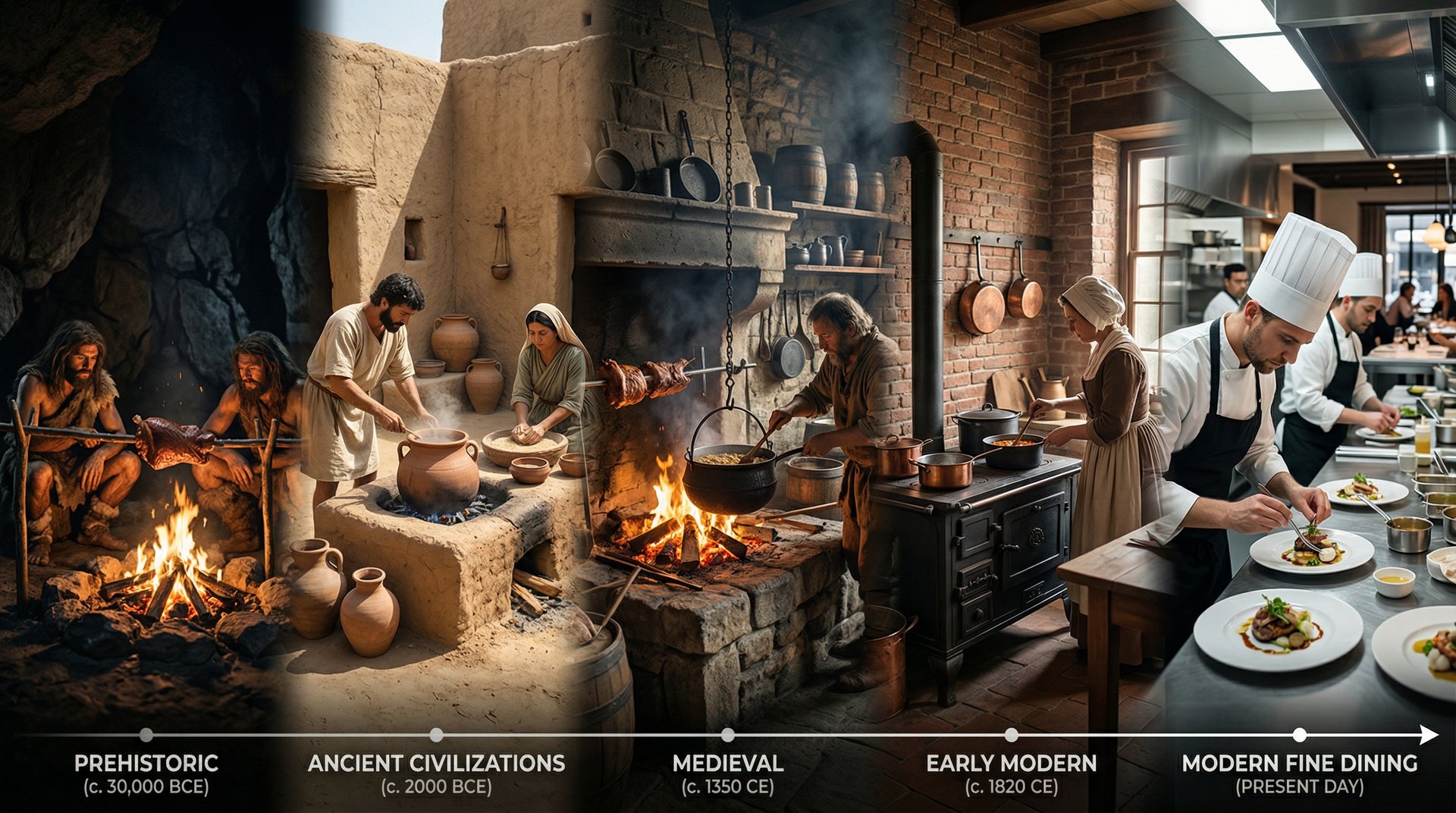
The evolution of cooking began with the discovery of fire, a pivotal moment in the history of early humans. This revolutionary achievement not only provided warmth and protection but also served as a means to prepare food, marking the transition from raw to cooked. The ability to harness fire allowed our ancestors to unlock a whole new dimension of food consumption, significantly impacting their nutrition and social structure.
Using fire for cooking led to the development of basic methods such as roasting and boiling. Roasting, which involved cooking meat over an open flame, enhanced the flavor and made it easier to digest. Boiling, on the other hand, allowed for the infusion of flavors and the preparation of soups and stews, which could sustain larger groups. These methods reflected the resourcefulness of early humans and their adaptation to the challenges of their environment.
The significance of cooking with fire extended beyond mere sustenance; it fostered social bonding among early communities. Gatherings around a fire for cooking and eating served as a communal activity that strengthened relationships and enabled the sharing of resources. As fire became central to daily life, cooking evolved into an essential element of ritual and culture, influencing societal norms and values.
This innovation laid the groundwork for future culinary developments and showcased the profound impact of cooking on human evolution. The ability to cook food not only improved nutritional intake but also facilitated the development of larger brains and complex social structures. Thus, the marriage of fire and cooking signified not just a survival tool but a cornerstone of human civilization.
The Advent of Pottery and Food Preservation
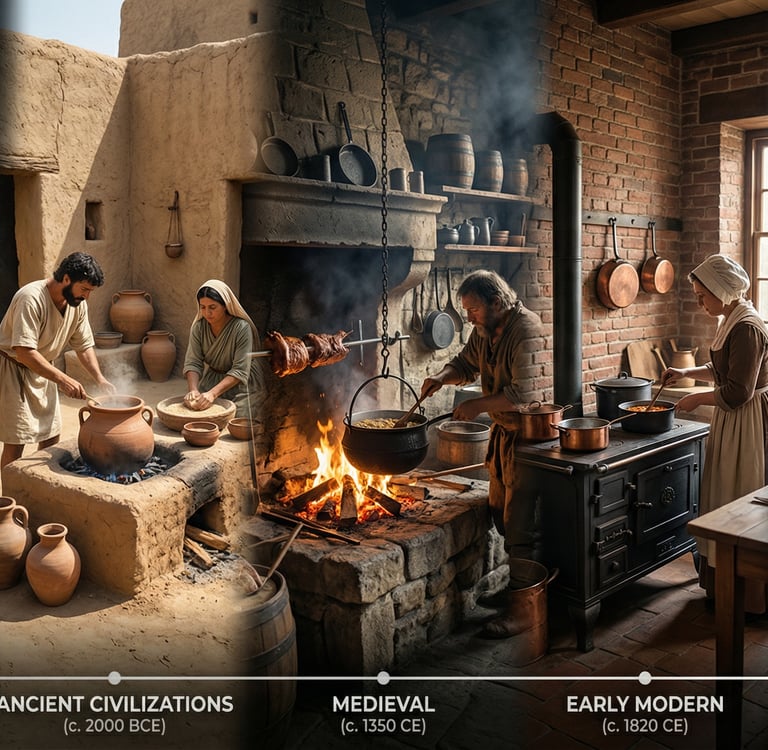
The development of pottery marked a pivotal moment in culinary history, revolutionizing how food was prepared, stored, and consumed. Early humans utilized these ceramic vessels to cook food in ways not previously possible. Before the advent of pottery, cooking was primarily limited to methods like roasting over open flames. However, the introduction of pots and pans enabled a wider array of cooking techniques, such as stewing and baking, which allowed for more complex flavors and textures in dishes.
One of the significant advantages of pottery was its ability to withstand the heat required for cooking. This development made it easier to heat food evenly and retain moisture, leading to more flavorful and nourishing meals. With the advent of stewing, for instance, ingredients could be combined and simmered over a low flame for extended periods, allowing them to meld their flavors while maximizing nutritional value.
In addition to enhancing cooking techniques, pottery also played a crucial role in food preservation. The development of sealed or covered pots allowed for better storage of grains, liquids, and perishable items. This meant that communities could safeguard their food supplies for longer periods, reducing waste and food spoilage. The ability to store ingredients in a sustainable manner facilitated a more stable food supply, which was essential for growing populations.
Moreover, the advances in food preservation led to the establishment of culinary traditions. With more consistent access to food, various societies began experimenting with local ingredients and cooking styles, leading to the rich diversity of cuisines we see today. Pottery thus not only transformed cooking practices but also enriched cultural culinary identities, marking a significant evolution in the history of food.
Agriculture and its Influence on Culinary Practices
The agricultural revolution marked a pivotal turning point in human history, fundamentally altering dietary habits and culinary traditions. By domesticating plants and animals, early societies transitioned from hunter-gatherer lifestyles to settled farming communities. This shift not only provided a more stable food supply but also introduced a wider variety of ingredients, which enriched the tapestry of regional cuisines across the globe.
As agriculture flourished, the cultivation of staple crops such as wheat, rice, and corn became integral to many cultures. Each region developed its own agricultural practices, influenced by local climates and soils, creating unique flavors and cooking techniques. For instance, the Mediterranean basin embraced the cultivation of olives and grapes, which led to the promotion of dishes seasoned with olive oil and accompanied by wine. Similarly, the domestication of animals provided not just meat but also dairy, which diversified diets and influenced culinary traditions.
Agricultural advancements also catalyzed social changes. With individuals focused on farming, communities began to form around shared resources. This led to the establishment of trade routes where surplus agricultural products could be exchanged, further enhancing culinary diversity. Spices and ingredients traveled across continents, influencing cuisines and creating a culinary dialogue that spanned borders. Cultures integrated foreign ingredients into their local profiles, evolving their practices into what we now recognize as distinct regional cuisines.
Thus, agriculture played a significant role in shaping the culinary arts, laying the groundwork for the varied and rich cuisines we enjoy today. Its influence can be traced through history as societies adapted their cooking techniques and flavors to accommodate new agricultural practices, ultimately leading to a complex interplay between food, culture, and identity that continues to evolve.
Modern Gastronomy: The Fusion of Science and Art in Cooking
Modern gastronomy represents a profound evolution in culinary practices, where the realms of science and artistry intersect in the kitchen. This specialized area of cooking has moved beyond mere preparation of meals to embrace a multidisciplinary approach that incorporates chemistry, physics, and innovative techniques. One prominent example of this is molecular gastronomy, a field that uses scientific principles to transform the textures and flavors of ingredients. Techniques such as spherification, emulsification, and sous-vide cooking are now commonplace in modern kitchens, allowing chefs to deconstruct traditional recipes and present them in new, unexpected forms.
Furthermore, the rise of culinary schools across the globe has contributed significantly to the transformation of cooking into a recognized fine art. These educational institutions not only equip aspiring chefs with essential skills but also instill an appreciation for global cuisines and innovative methodologies. With structured training in various culinary techniques, chefs are now exploring the boundaries of flavor pairing, presentation, and the dining experience as a whole.
The globalization of food culture plays a crucial role in the evolution of modern gastronomy. With easy access to diverse culinary influences, chefs are increasingly inspired by international flavors, incorporating them into their own creations. This fusion of cultures leads to unique dining experiences that celebrate both history and innovation; dishes often reflect a duality, showcasing heritage while embracing contemporary trends. As a result, modern cooking not only satisfies hunger but also serves as a spectacle, a story, and a canvas for creativity.
In conclusion, modern gastronomy exemplifies how culinary arts have adapted to the modern world by incorporating scientific advancements and diverse cultural influences. Chefs today are not only masters of flavor but also artists and scientists, dedicated to pushing the boundaries of what is possible in the culinary landscape.
Yumchefie
Your intelligent kitchen companion. We use advanced AI to help you reduce food waste, discover new flavors, and cook with confidence.
Contact
Subscribe
Copyright © 2026 - YumChefie